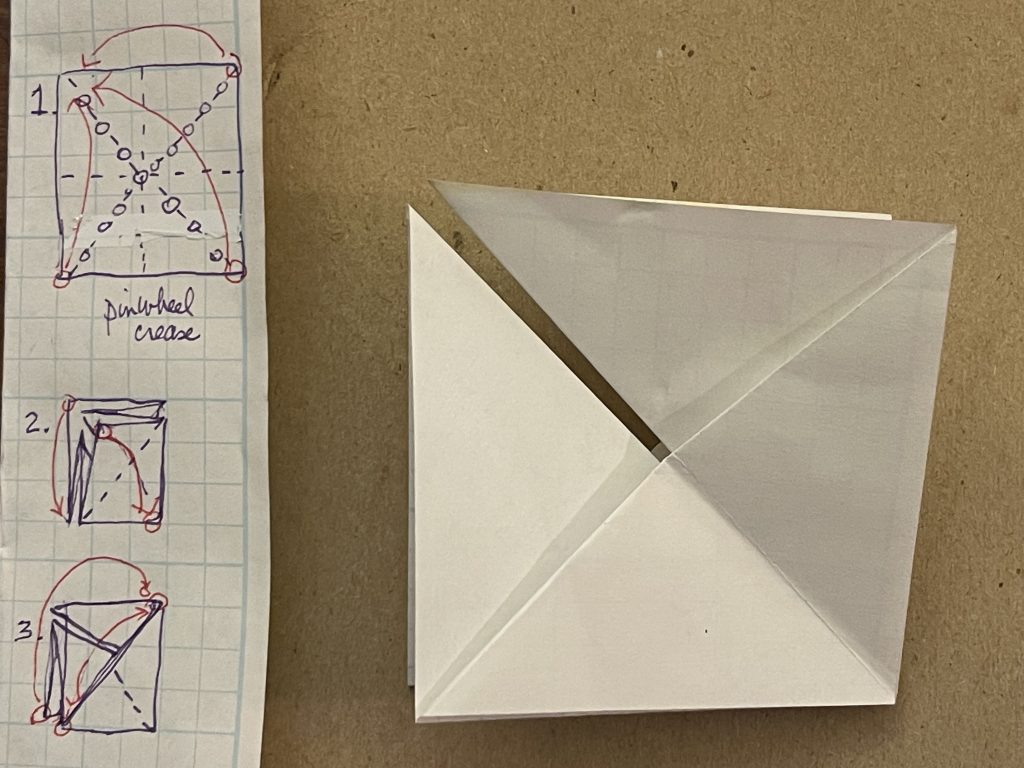
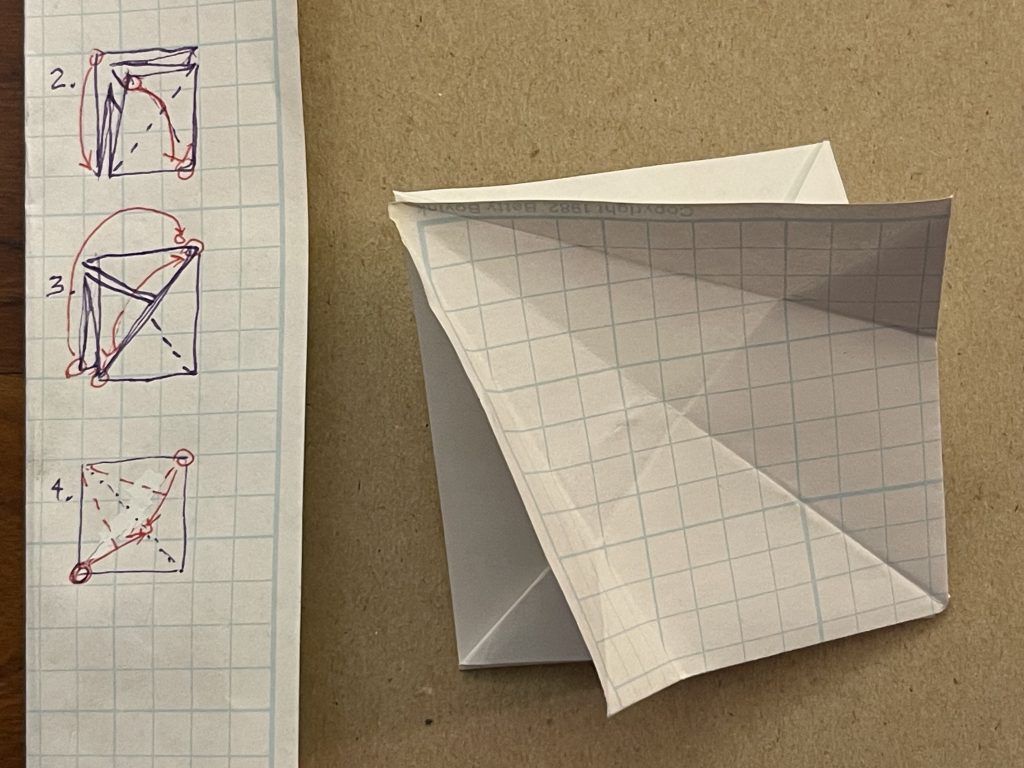
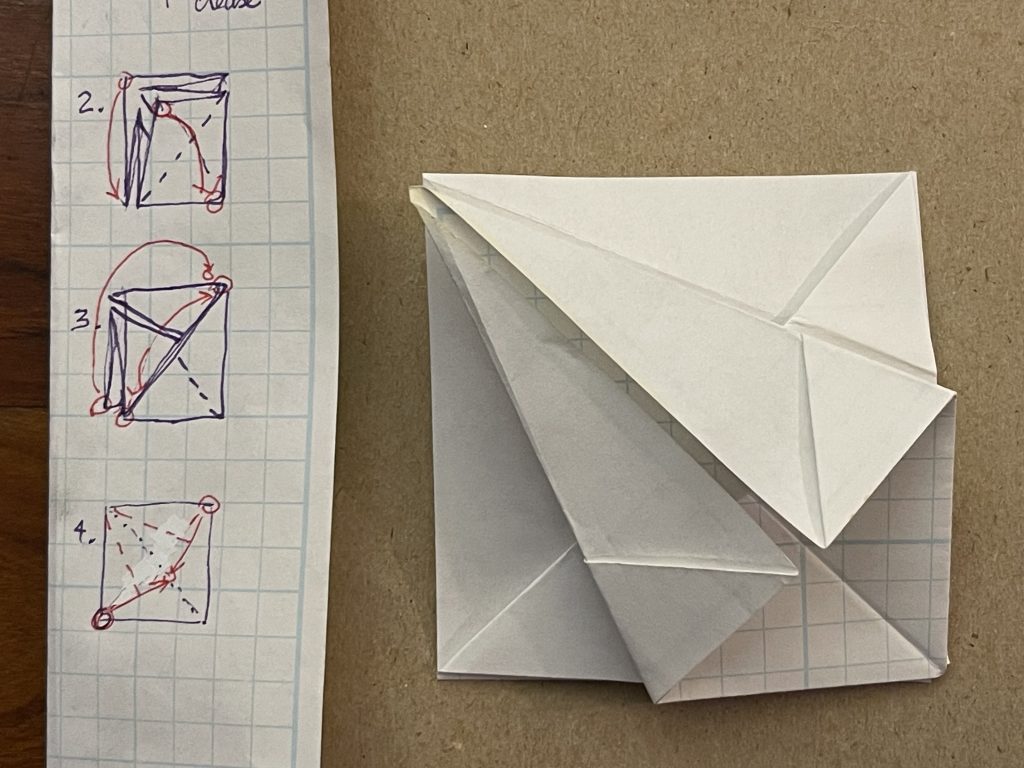
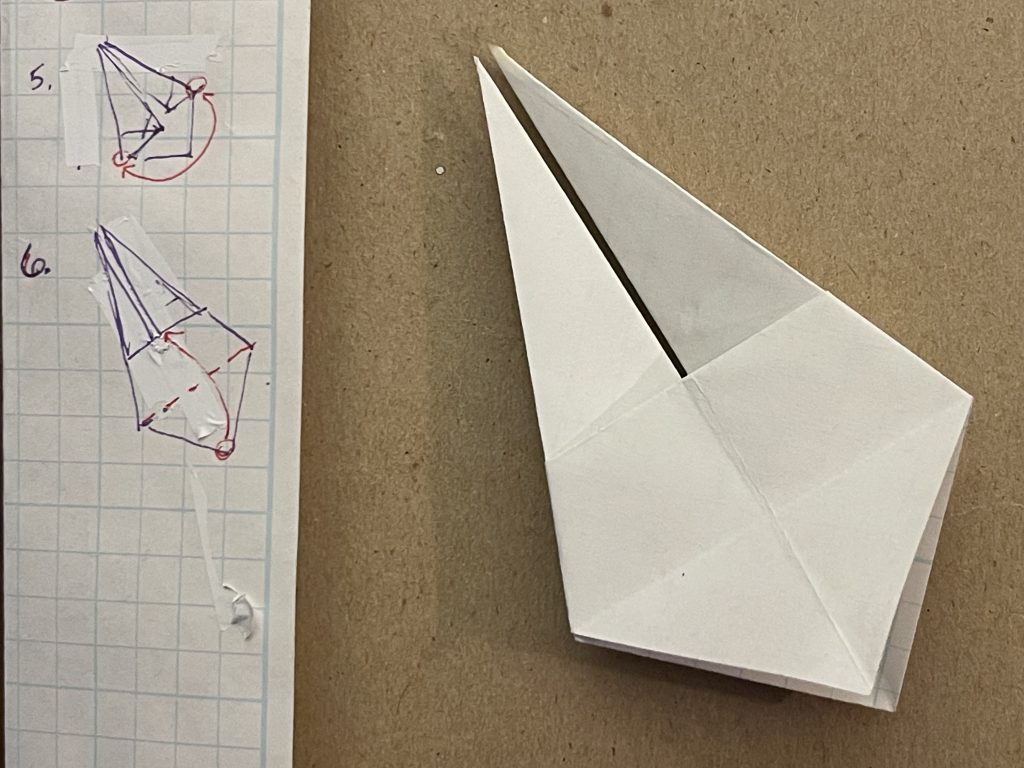
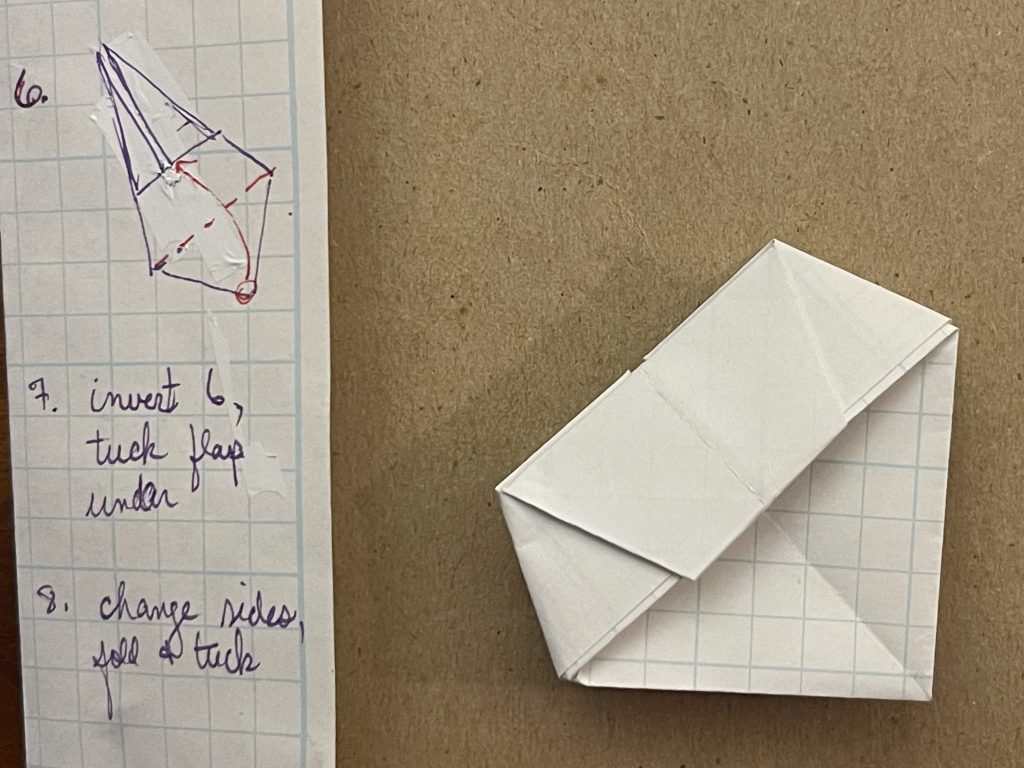
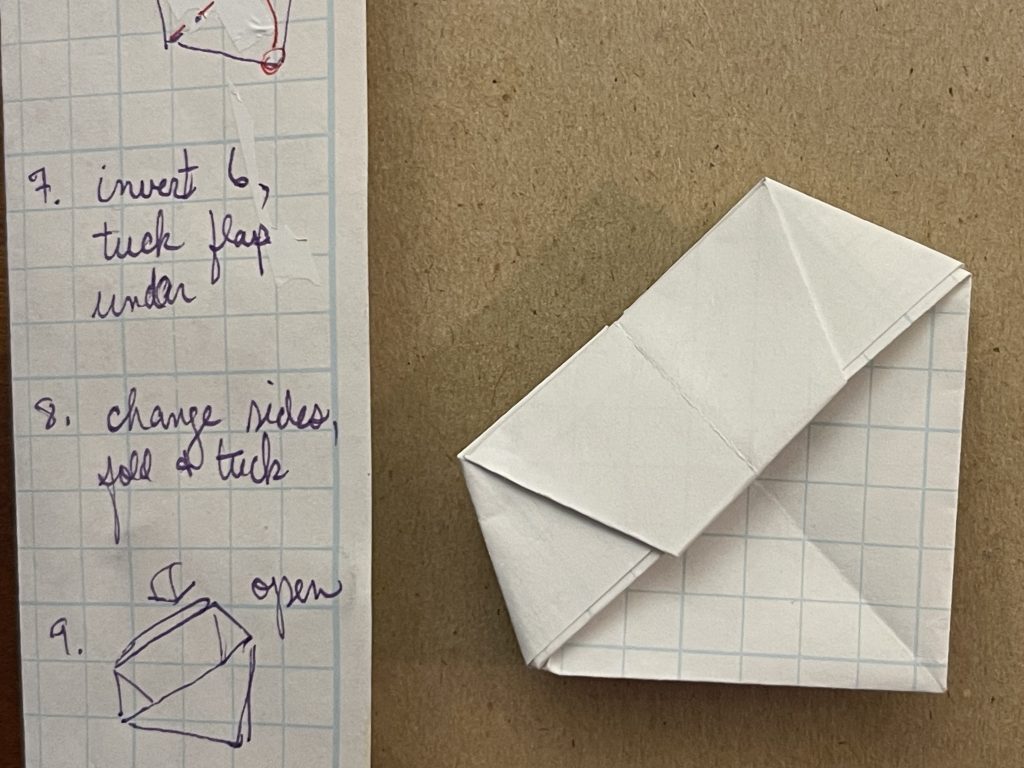
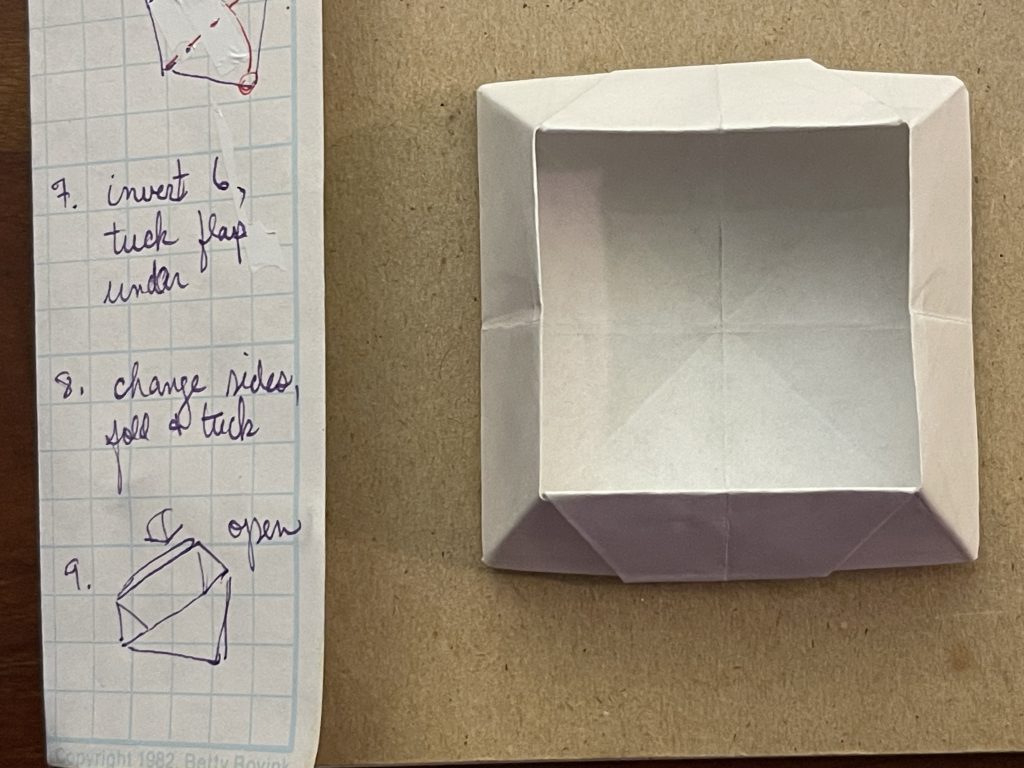
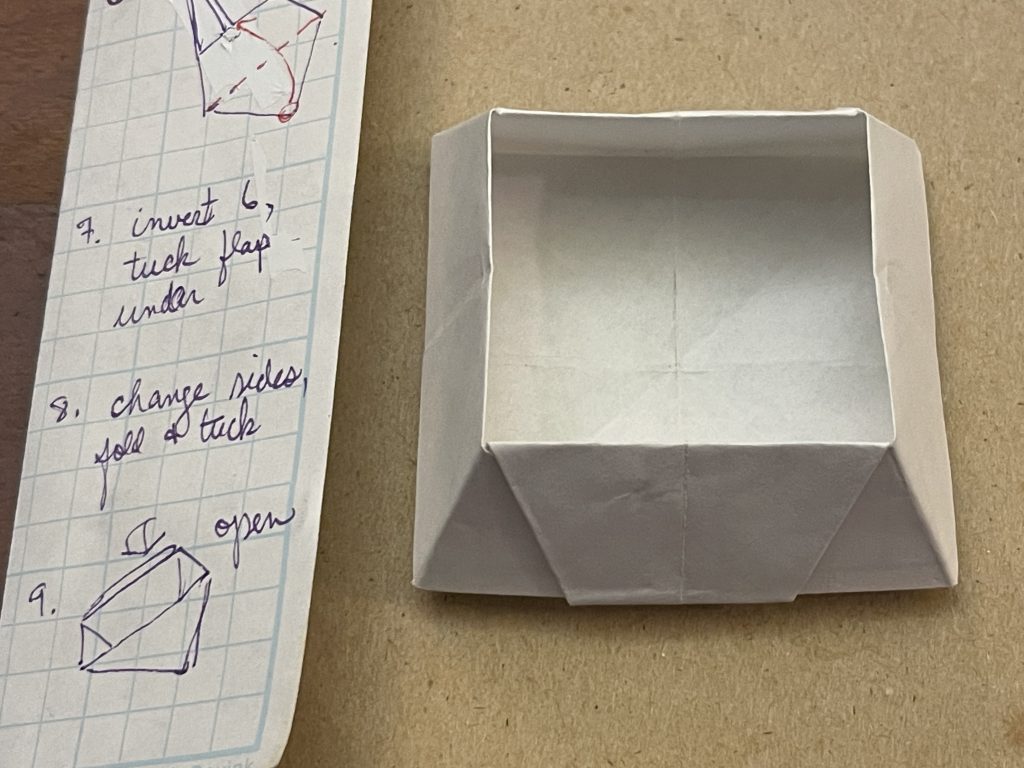
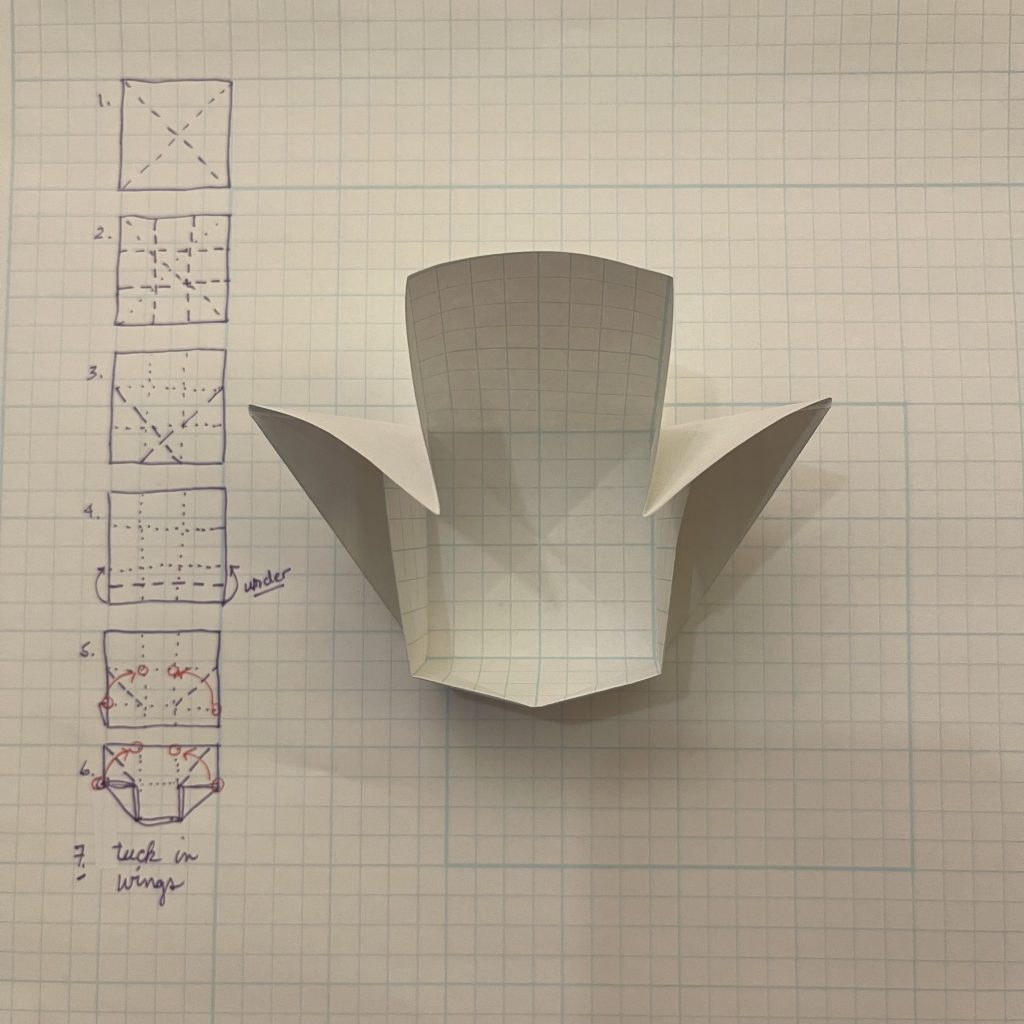
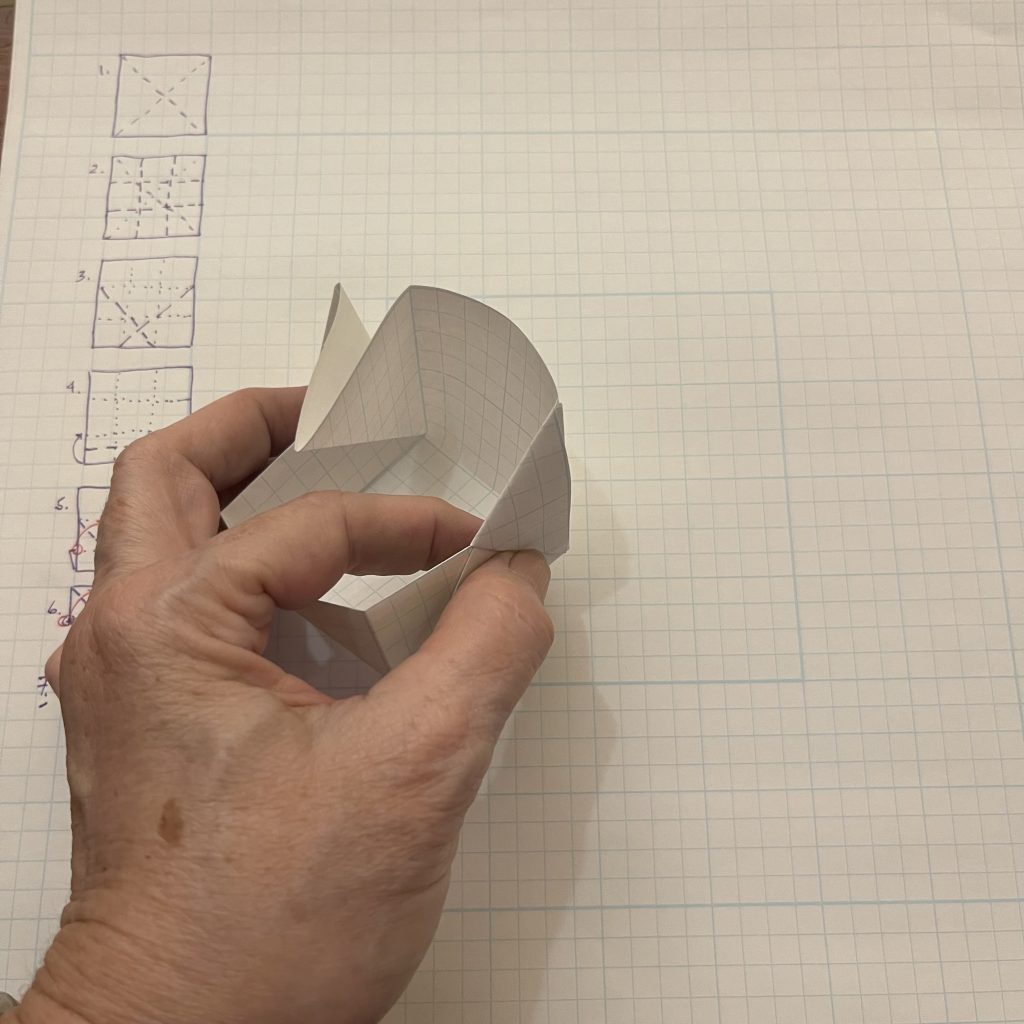
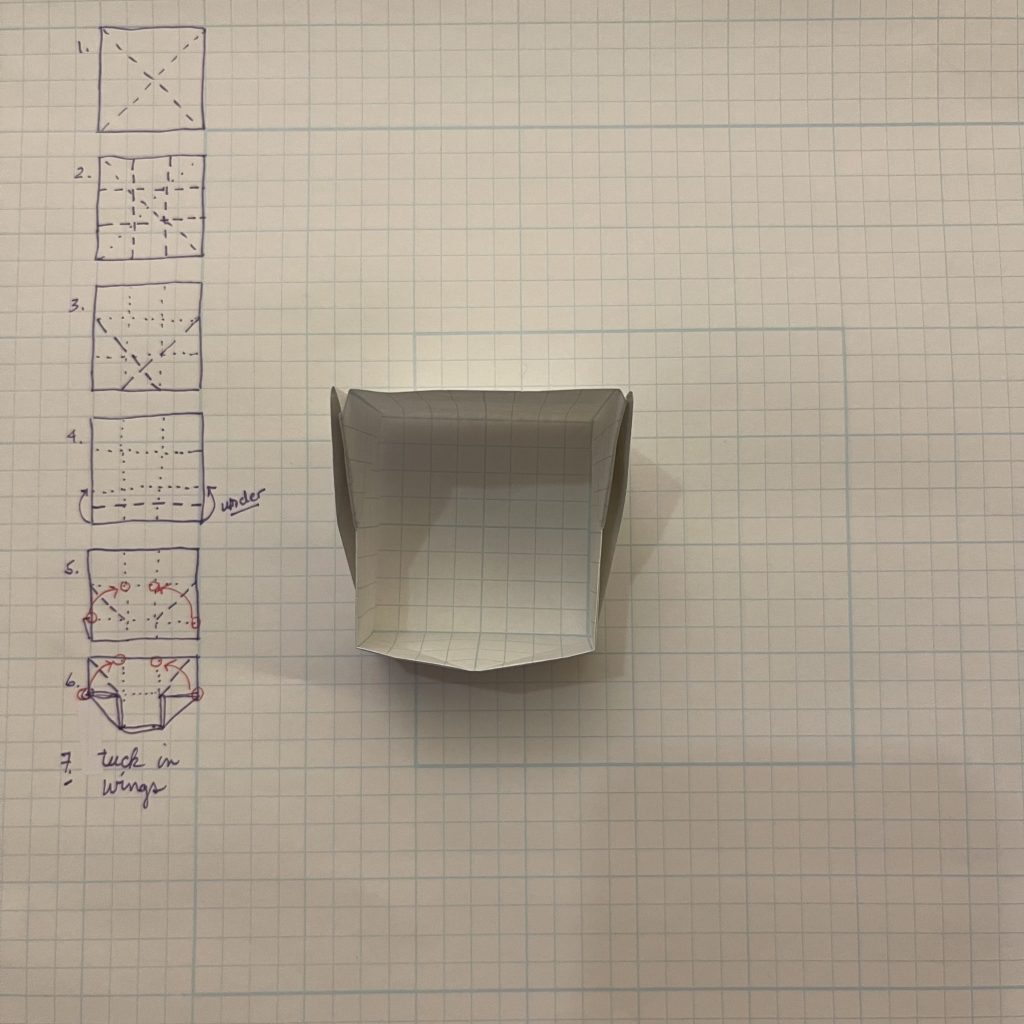
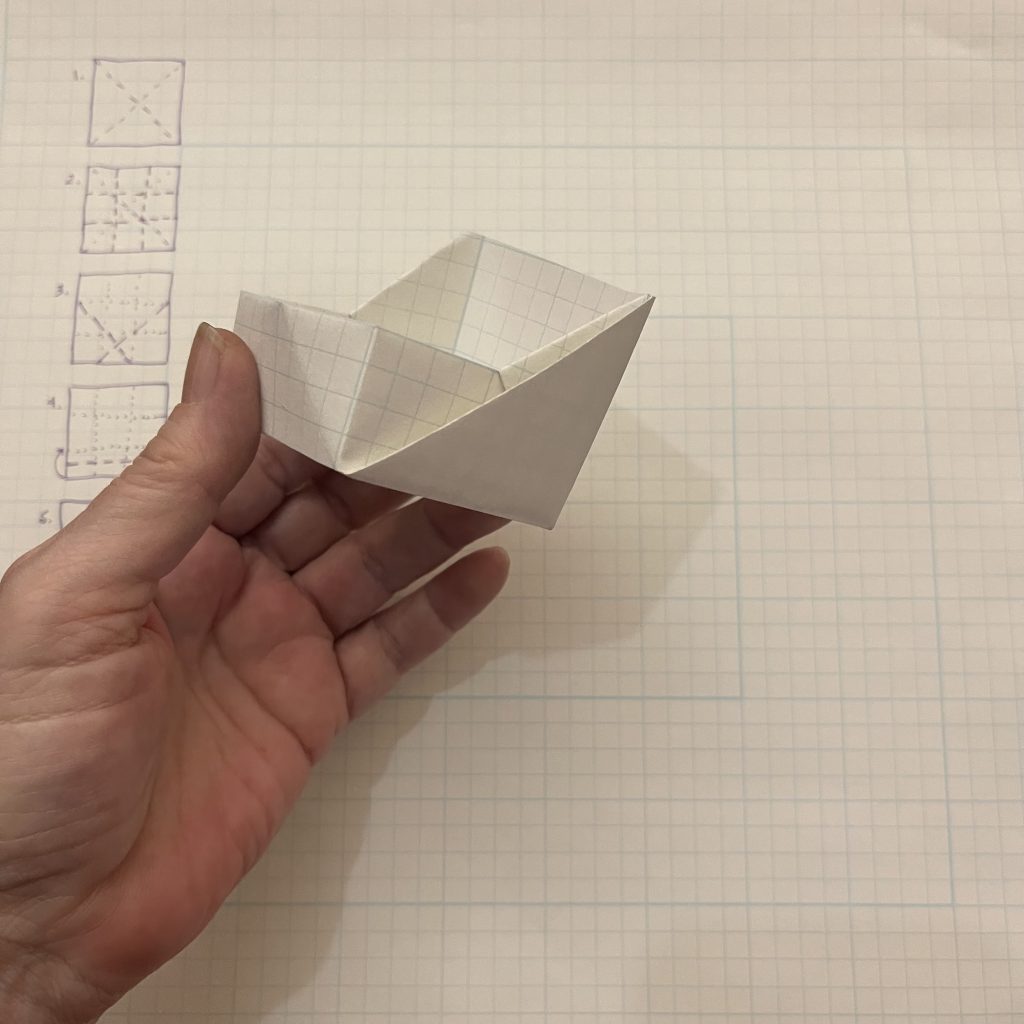
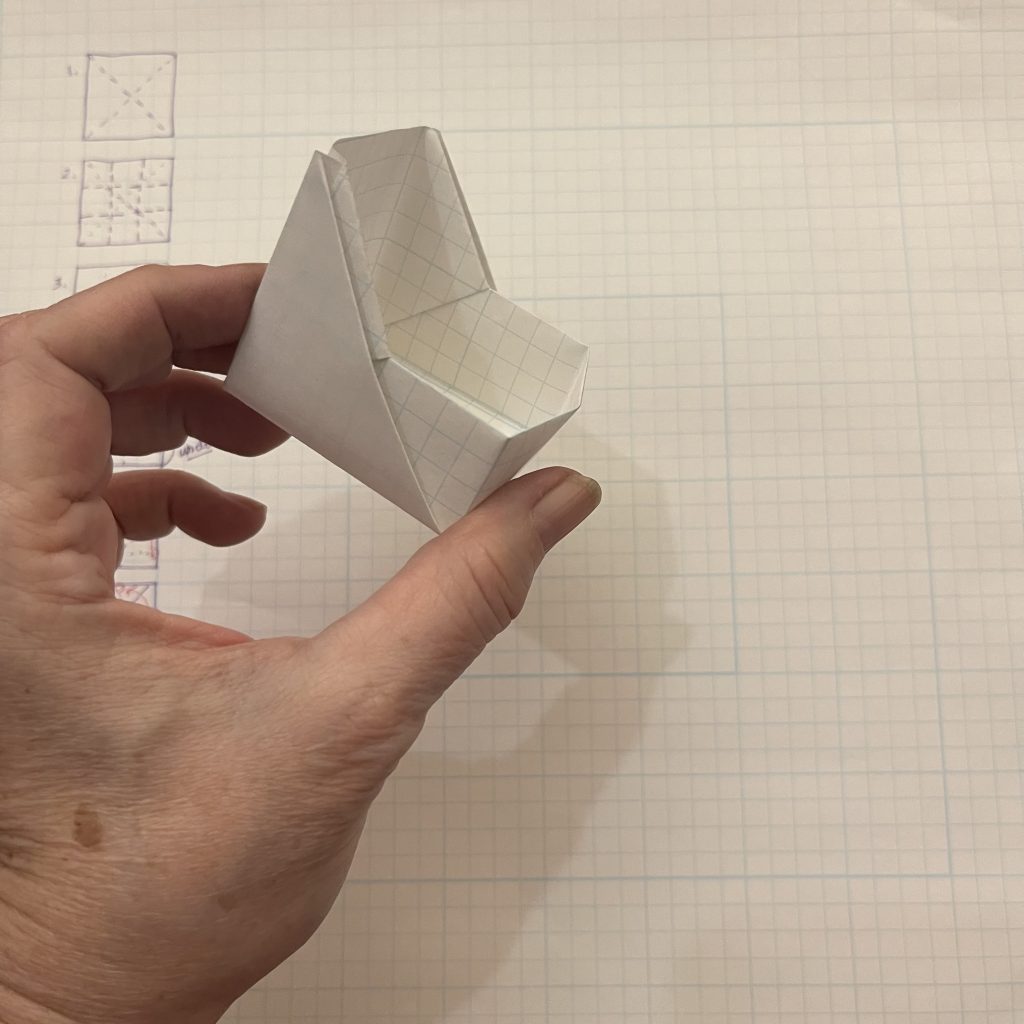
a square box with inward-slanting sides.
Turn of the millennium arts.
a square box with inward-slanting sides.
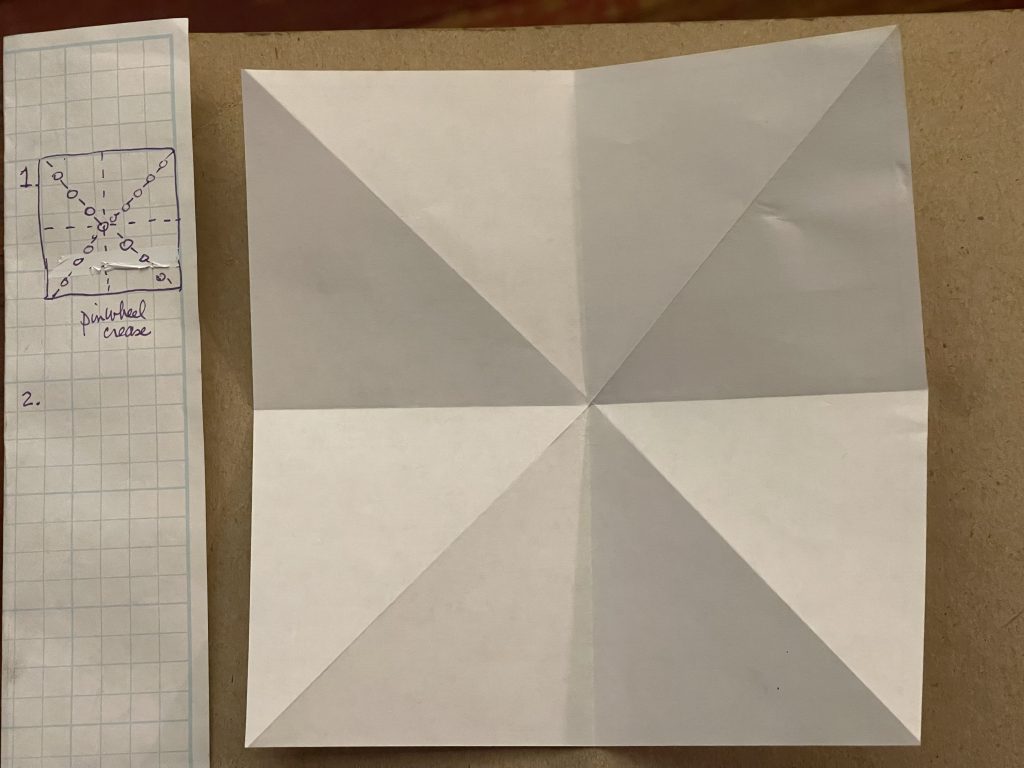
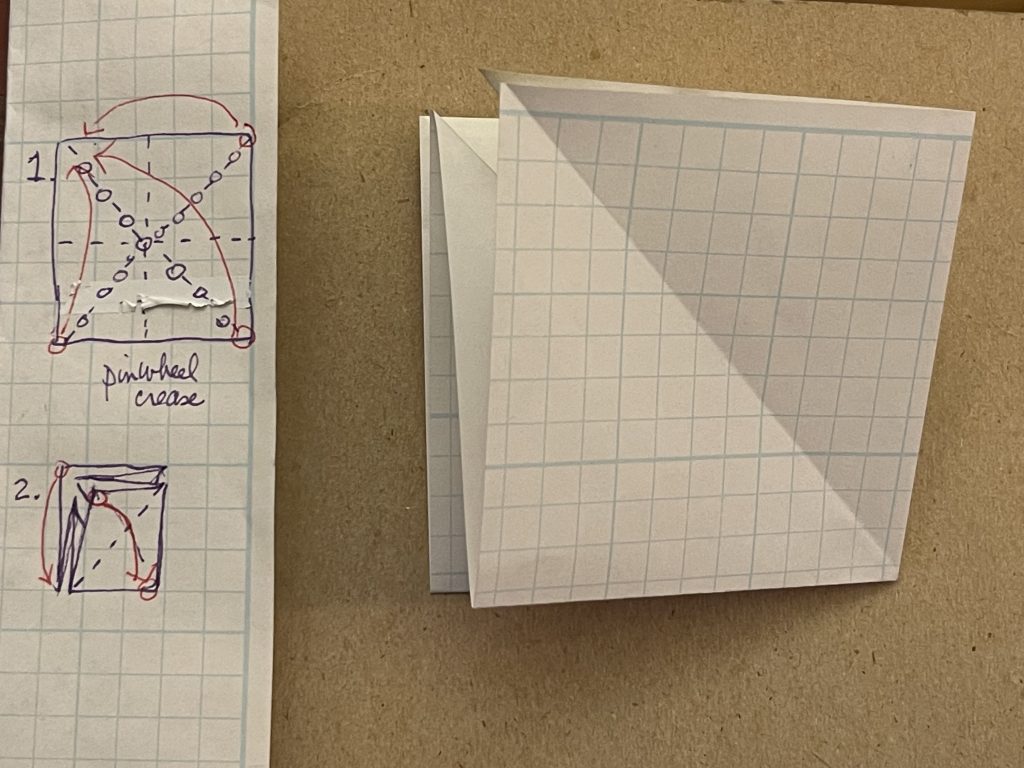
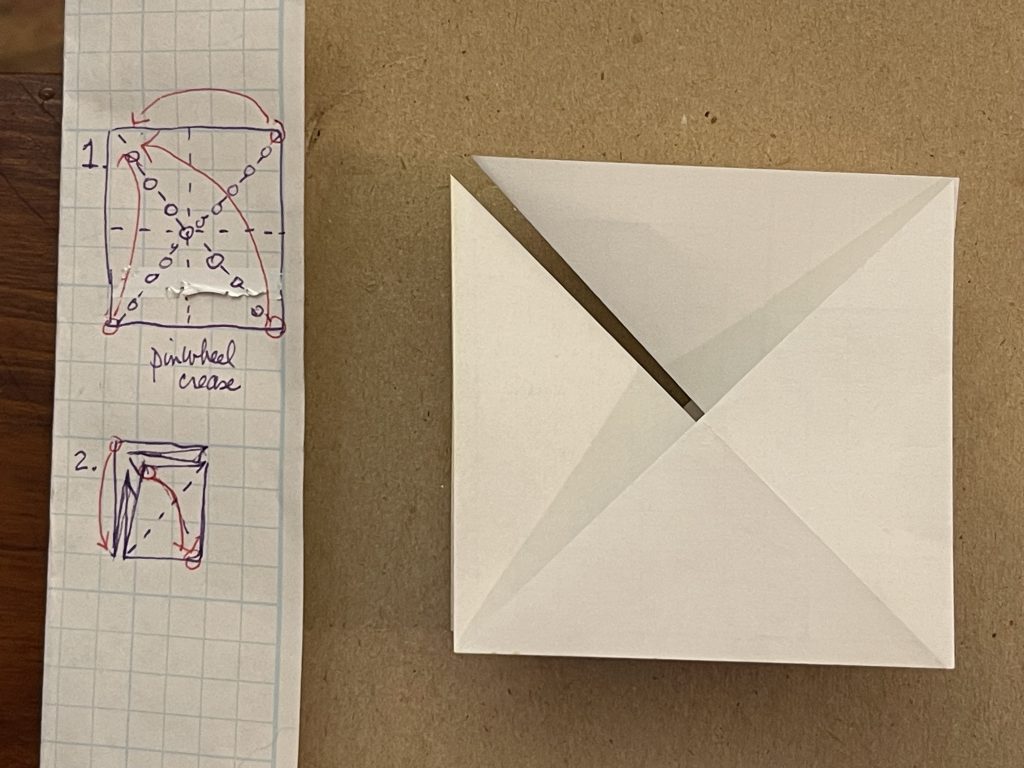
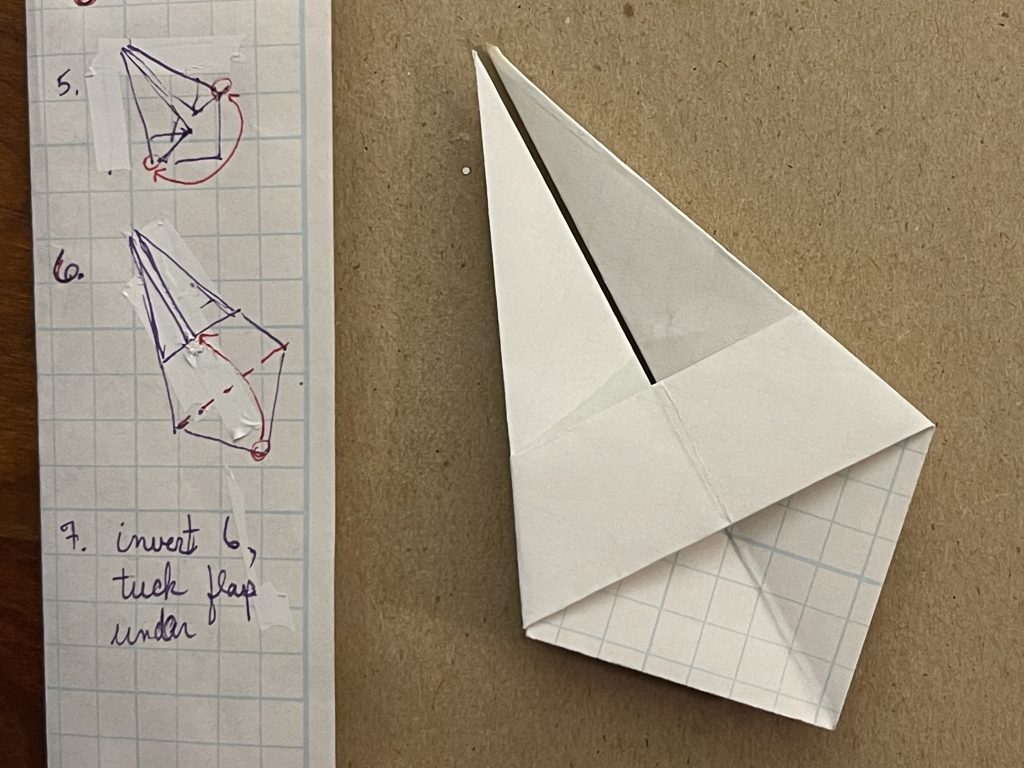
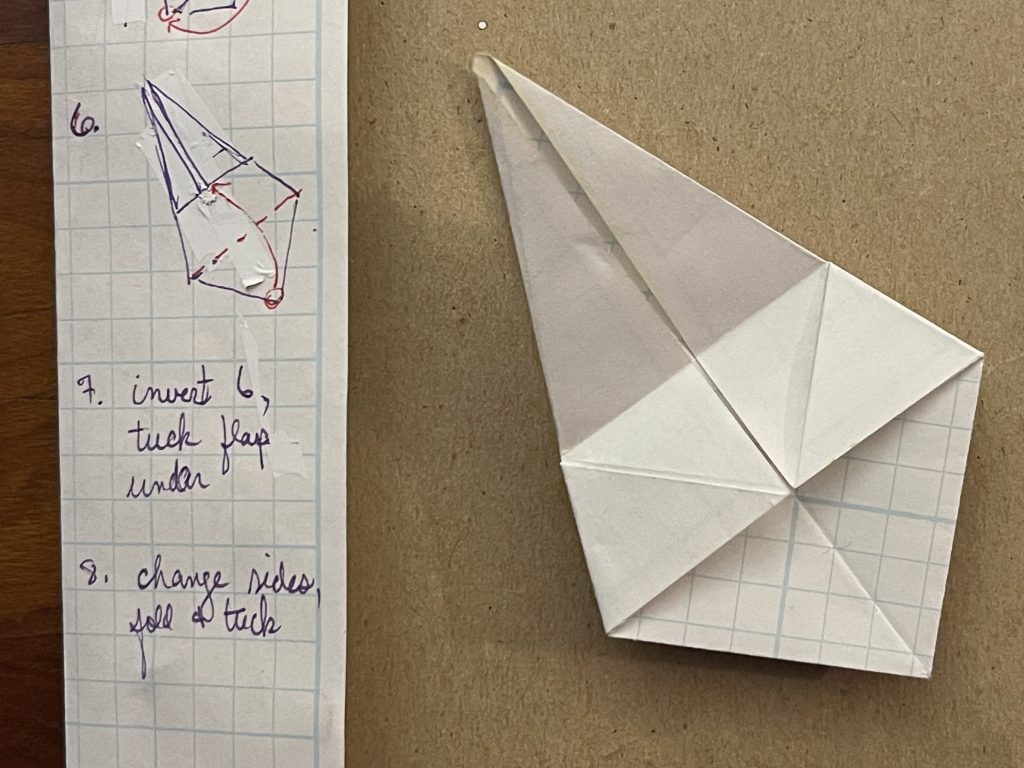
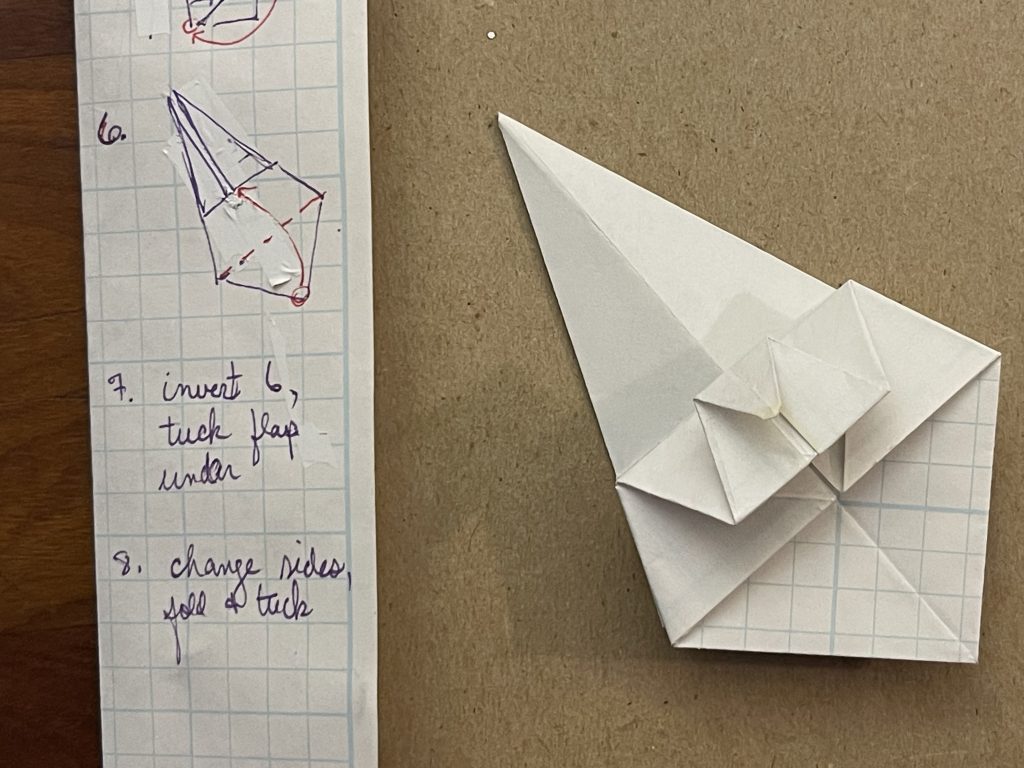
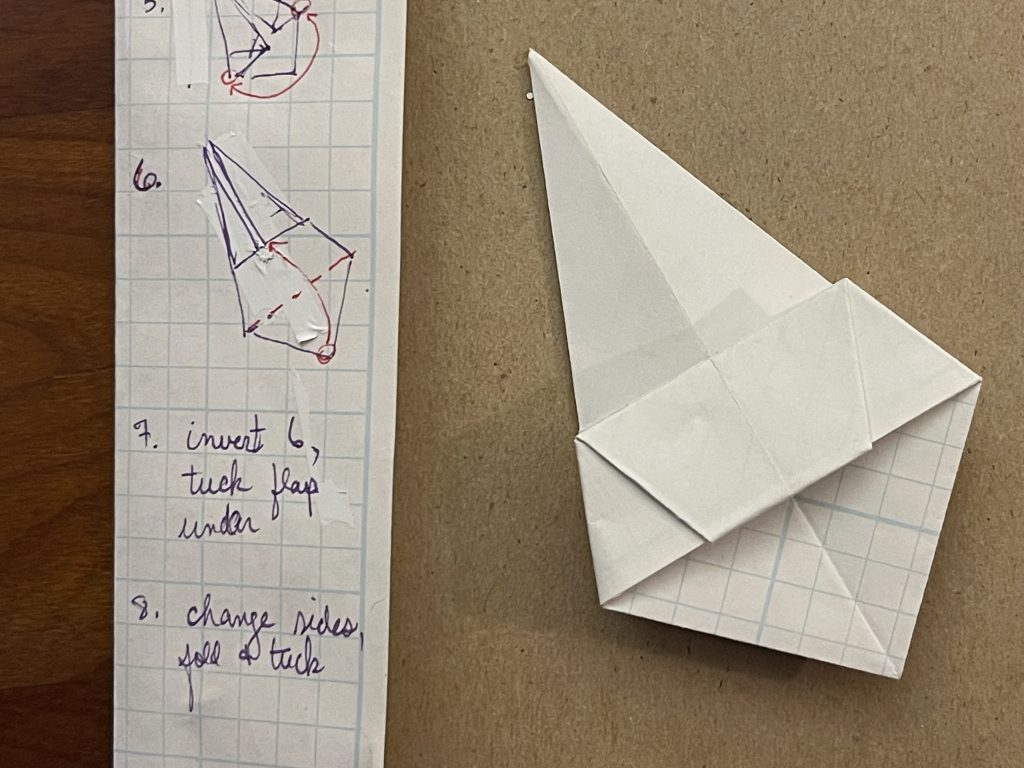
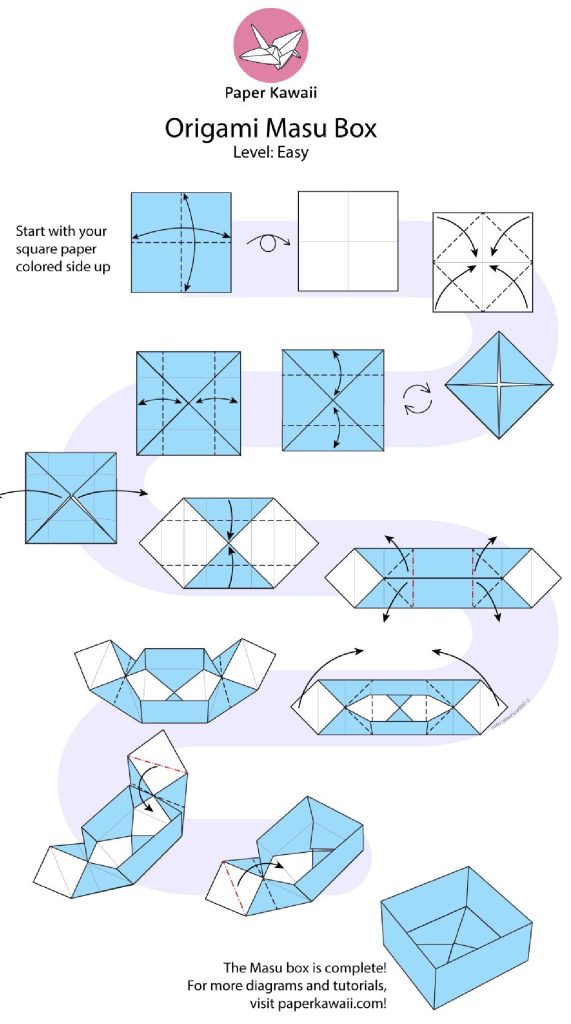
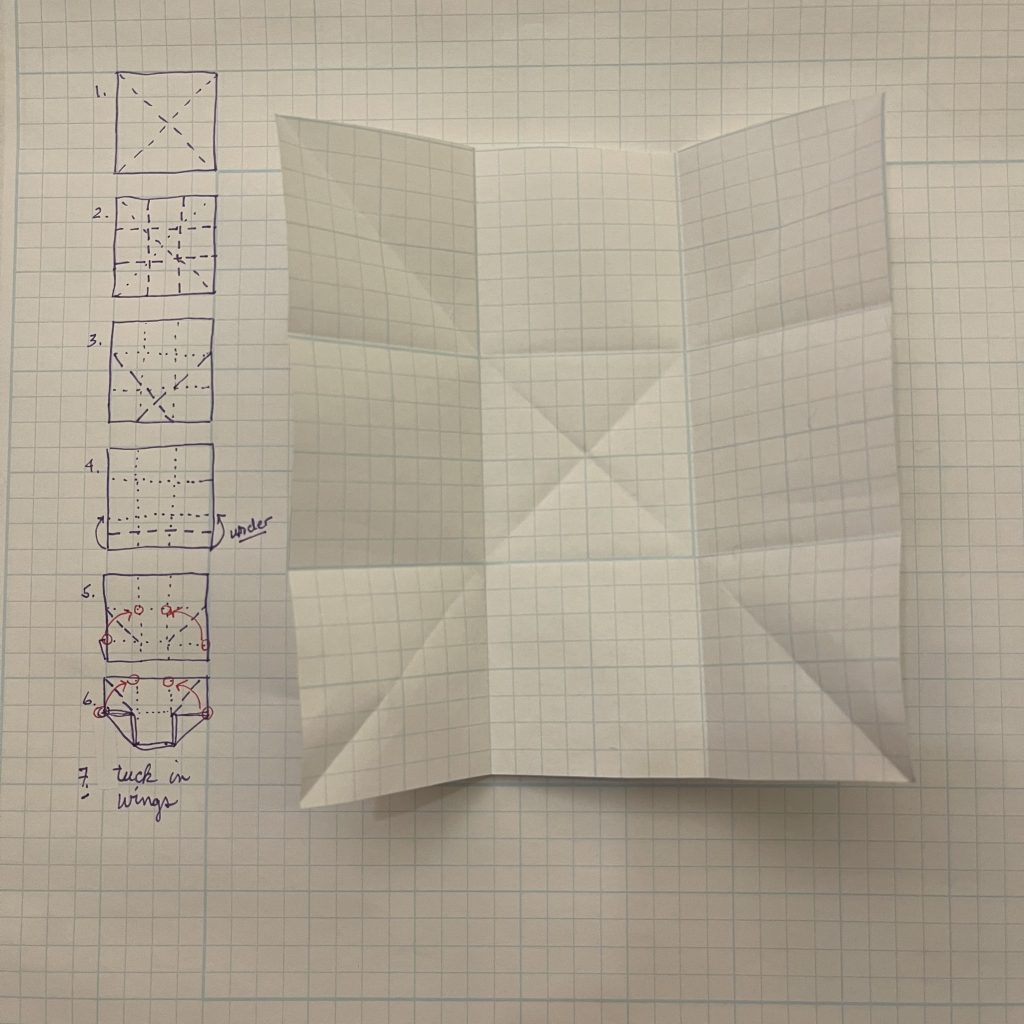
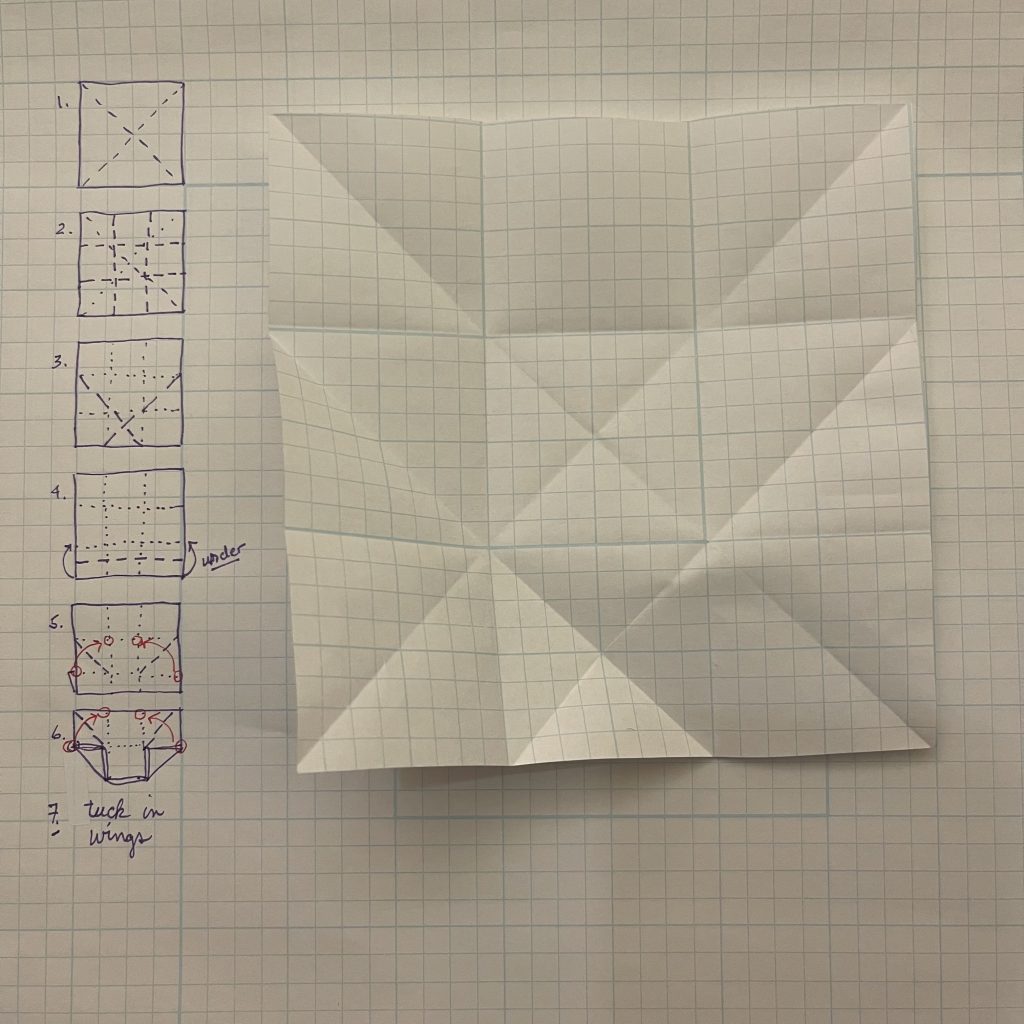
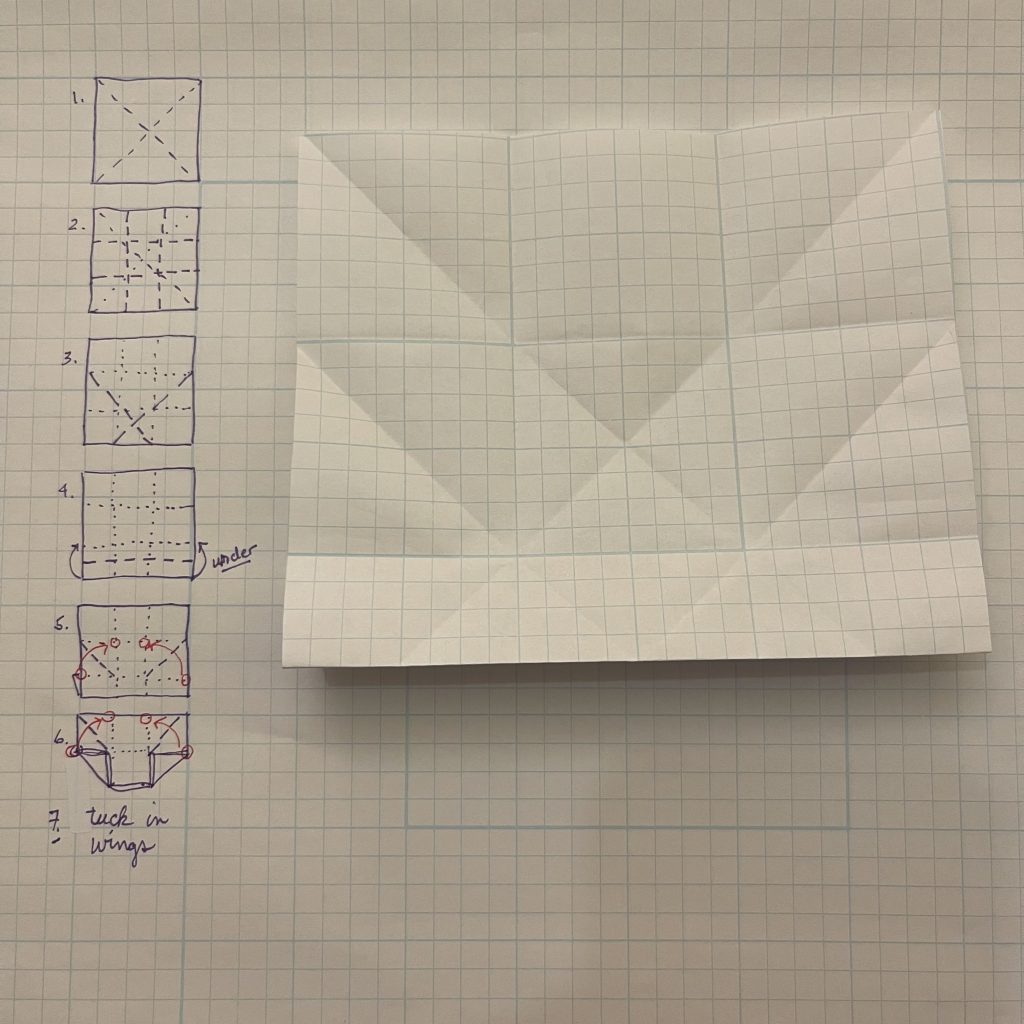
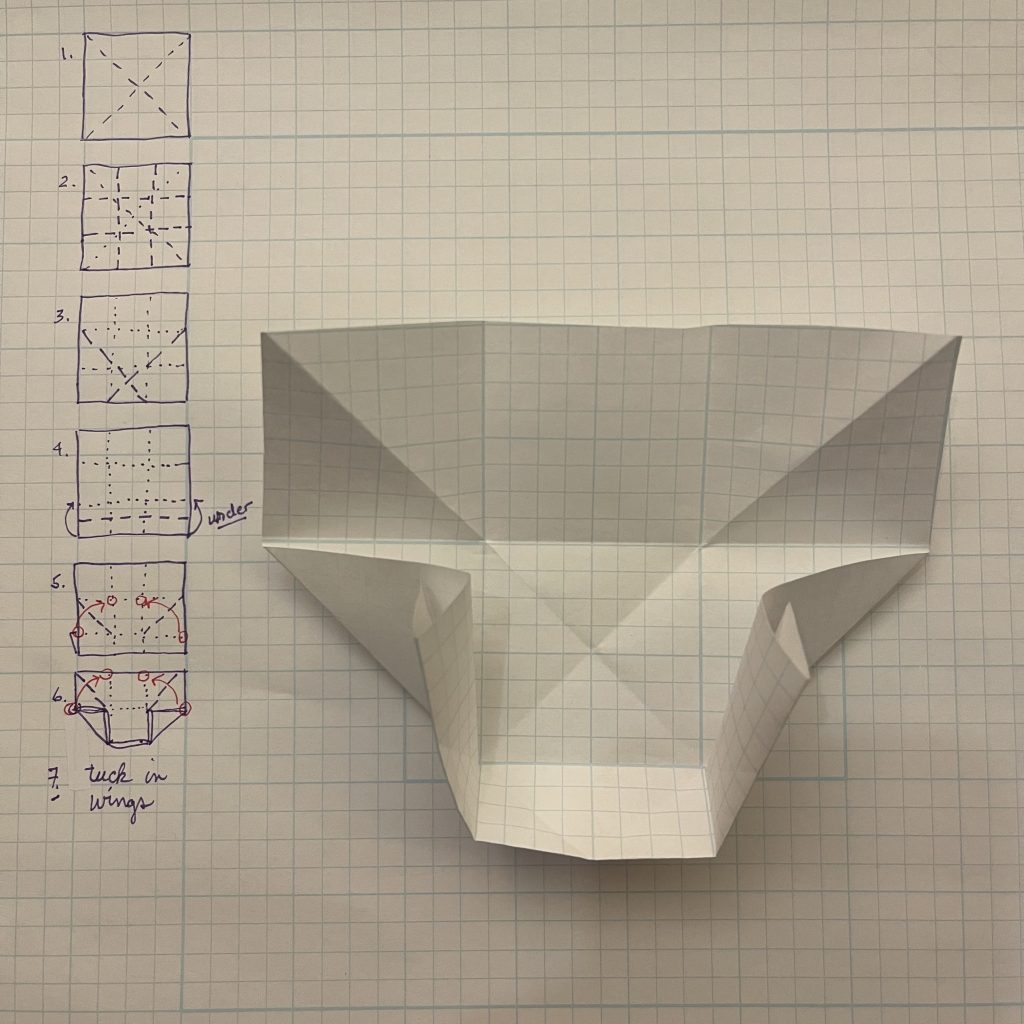
simple box from a square paper. box length & width is 1/3 the paper’s length and width. its height is half of that, or 1/6 the paper’s length. box sides and bottom are double layered. the inside layer of the box bottom is where the 4 corners of the paper meet. use a sticker there for extra security.
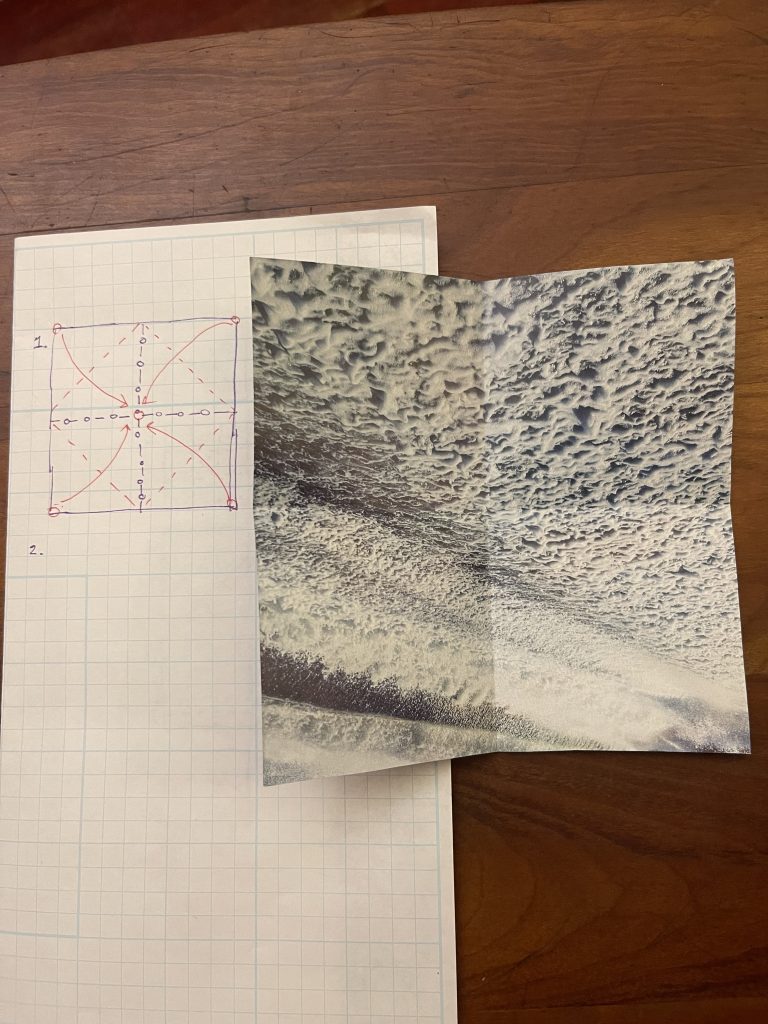
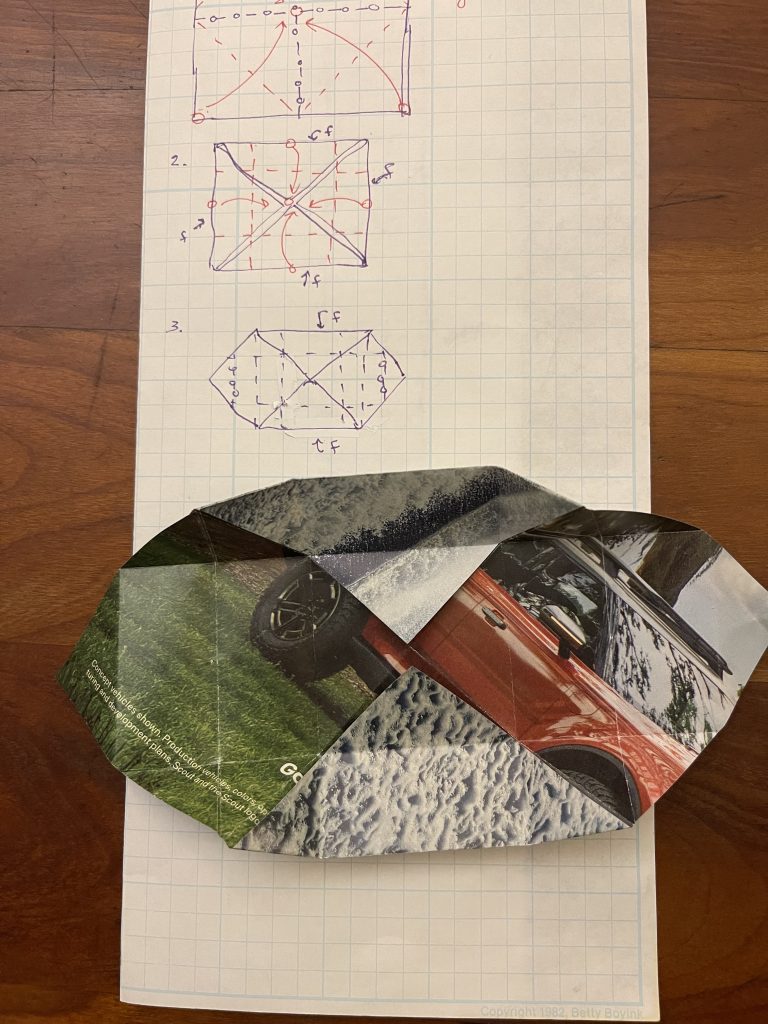
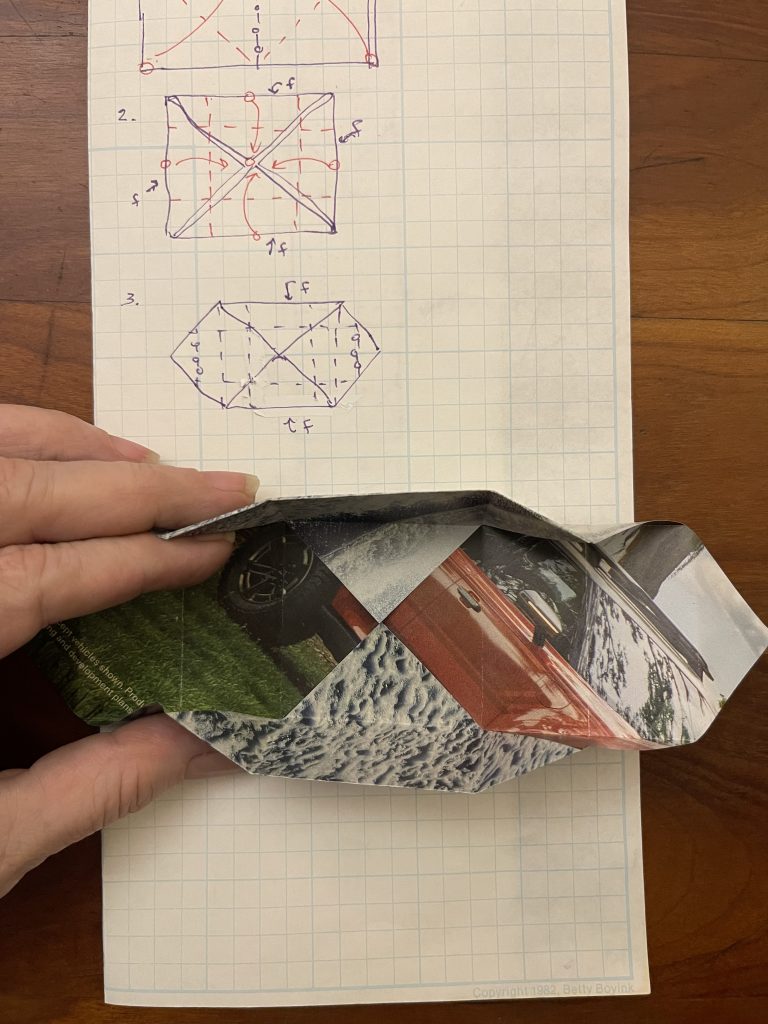
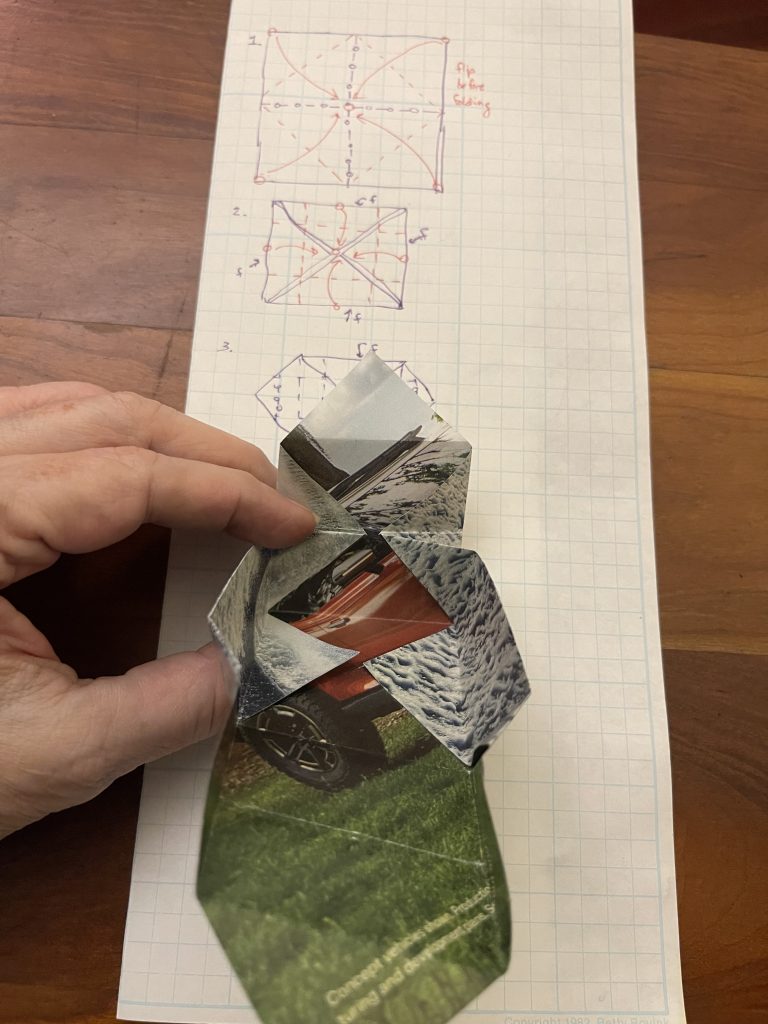
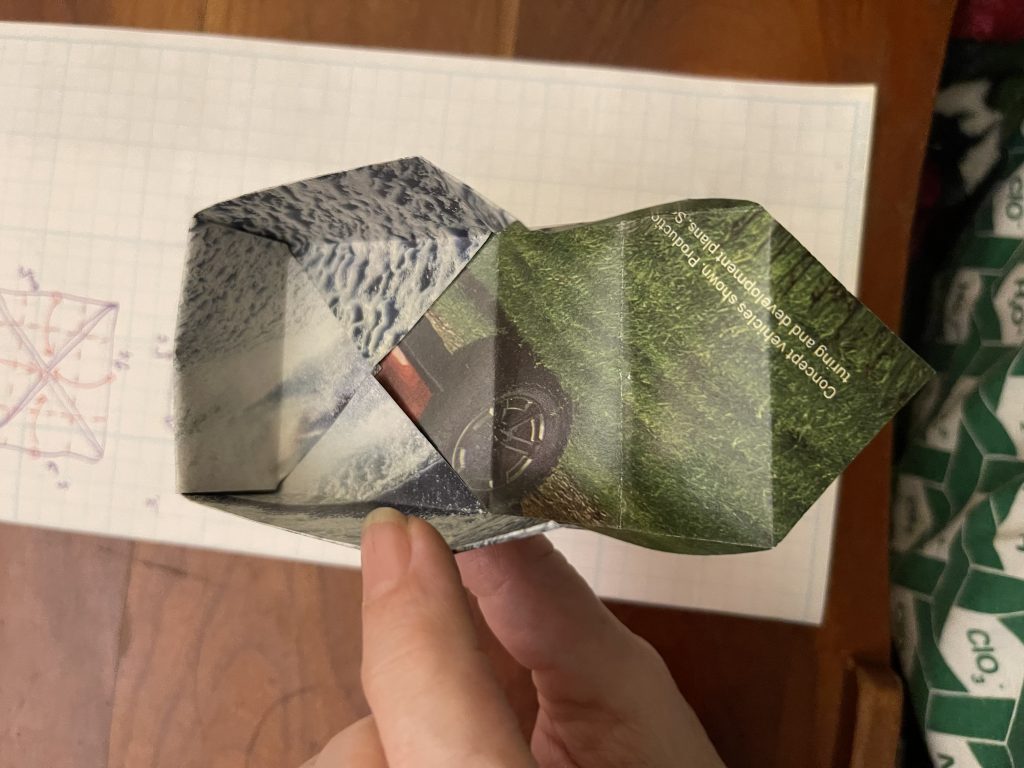
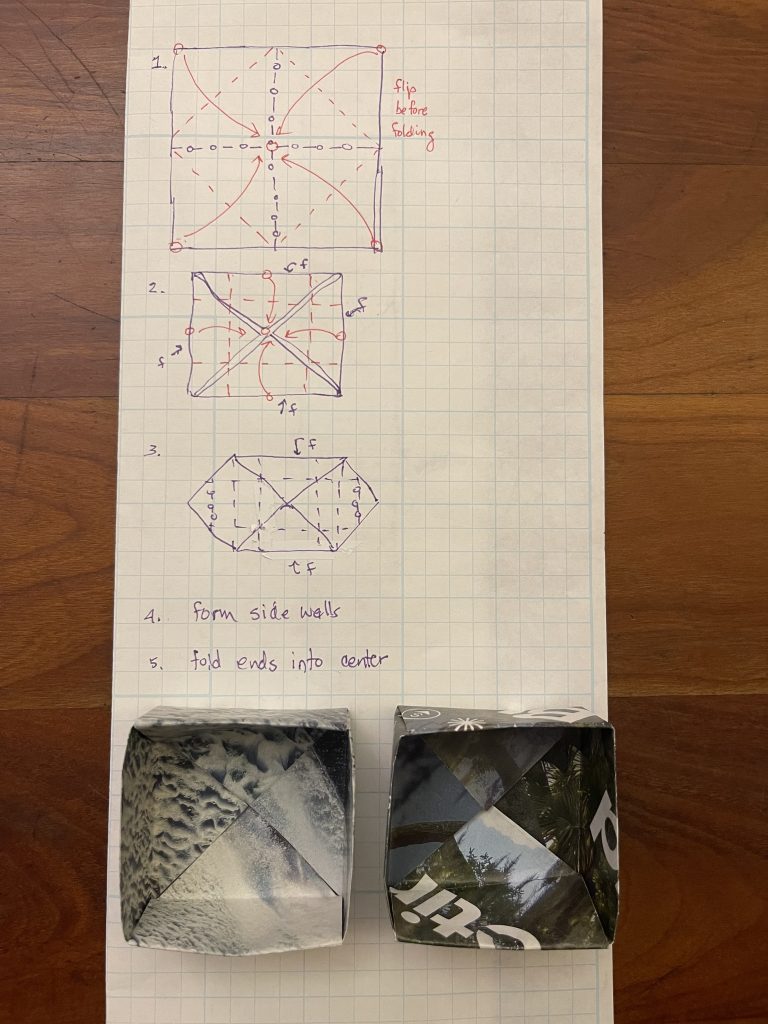
a masu box makes an excellent lid, as well. to fit a lid, in step 2, fold the sides a little short of the center, instead of going all the way.
to make a masu cube, in step 2, fold in thirds instead of folding quarters that meet in the center.
a simple box with weak ends and double-layer sides. fold paper in thirds to establish sections. middle section becomes box floor. form side walls with each outer third and middle section. unfold side walls, crease & pinch to form ends.
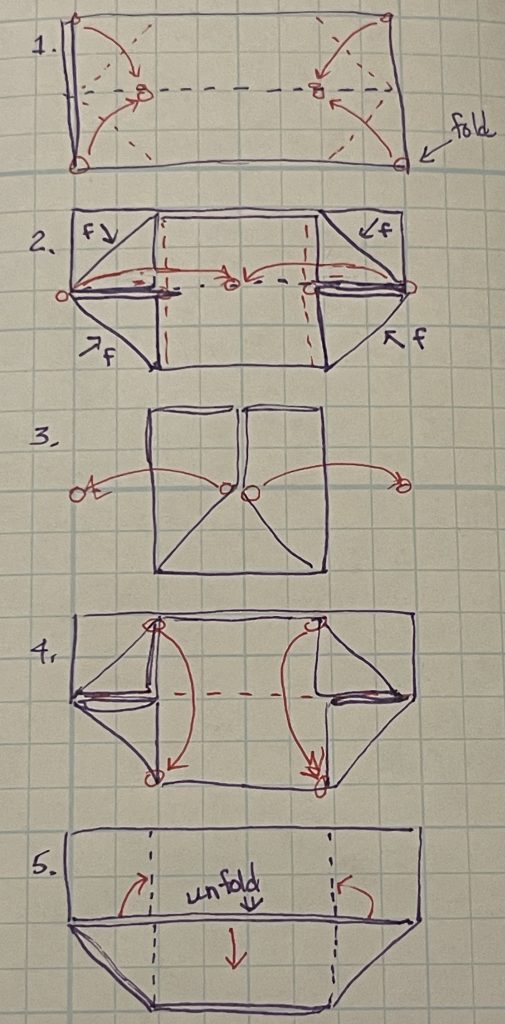
box can be flattened & re-opened, as desired.
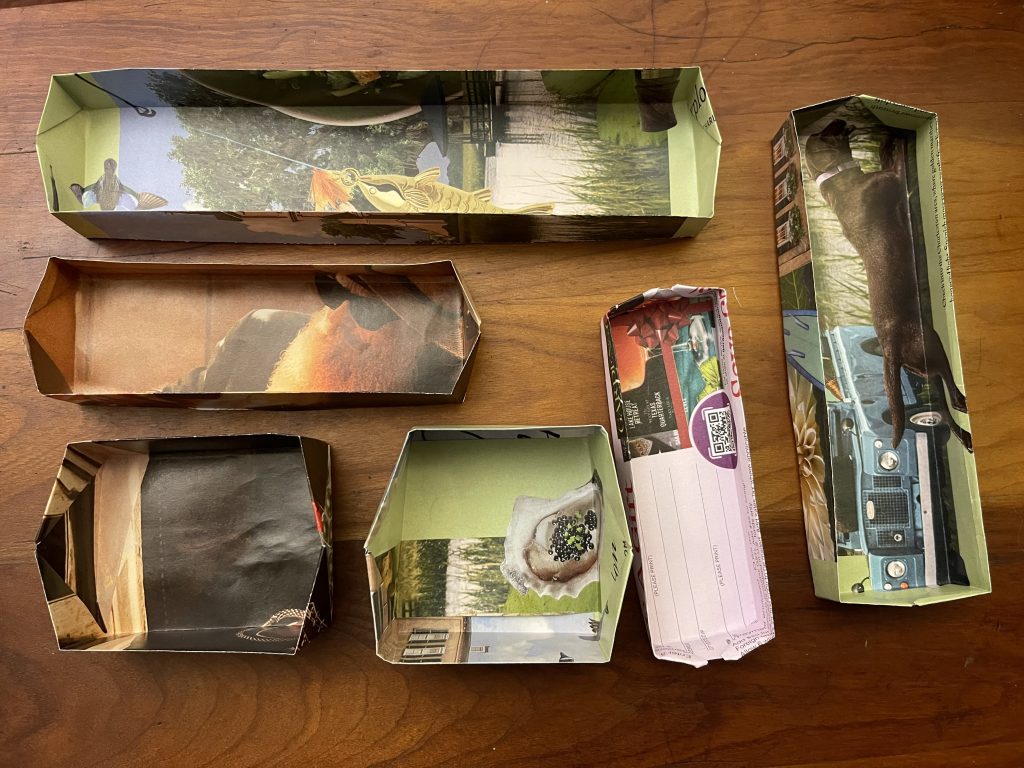
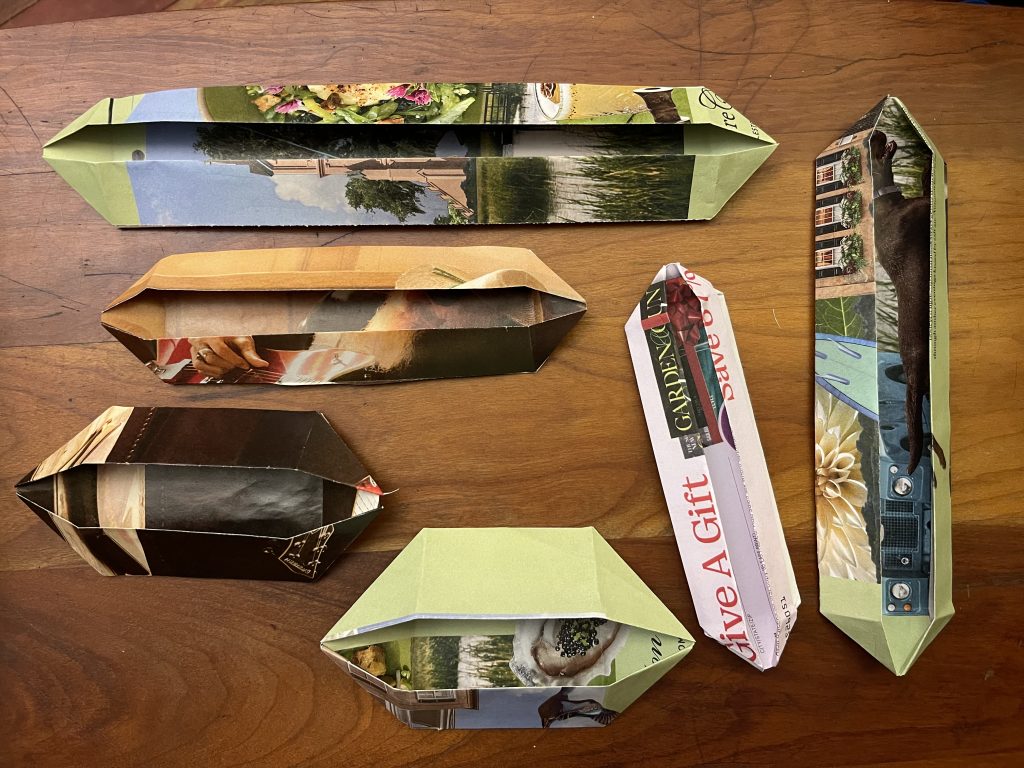
a simple box with square stable ends. bottom and one wall are 1 layer, the other side wall is 2 layers.
to produce a box that is x” by y”, use a sheet of paper that is 4x” by (y + 2x)”. sample grid box is 6 squares by 12 squares, made from a 24×24 sheet. to make a cube, use a sheet that is 1/3 as wide as it is long.
Continue reading “square-end box”folding diagram for a simple open-top box with high back and low front.
The potholder weaving charts are now located here:
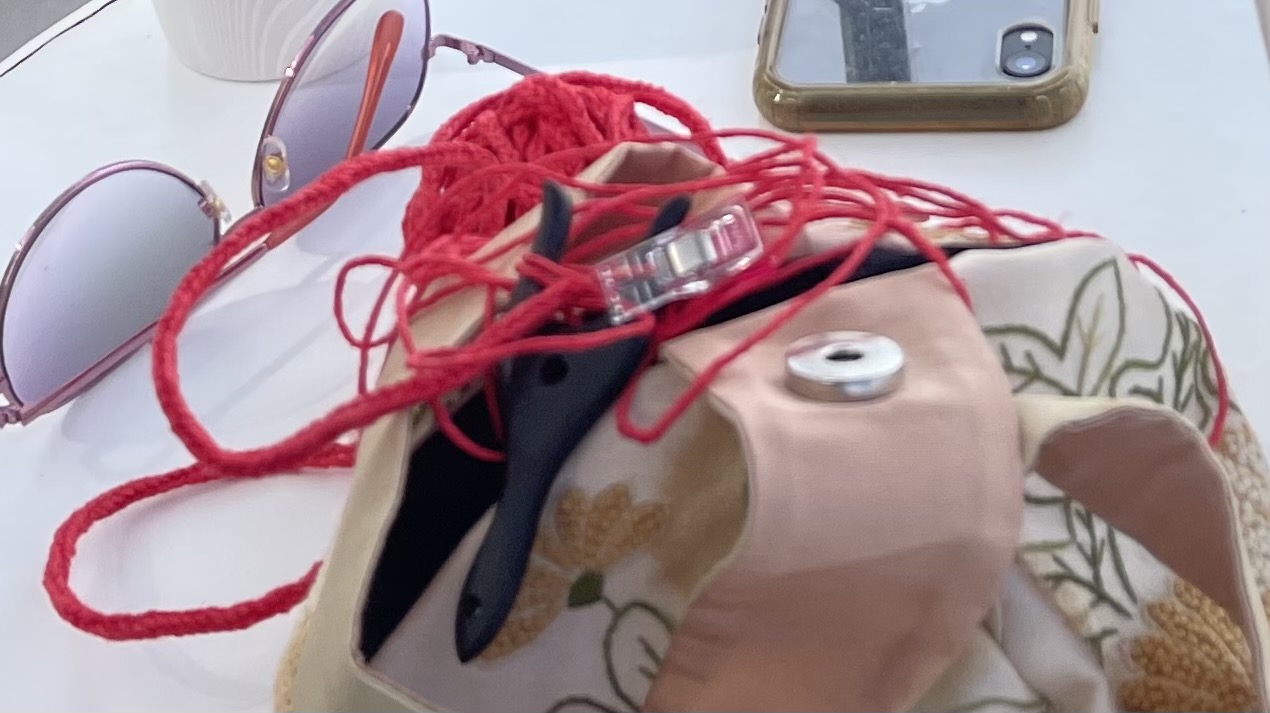
Last week, I found some pre-cut wool and linen in my workbasket, packed with a bobbin of embroidery floss. I’m pretty sure it’s from a kit someone gave me – alas, I do not remember who. So I whipped up a new pouch for Mathghamhain Ua Ruadháin, to relieve some of the strain on the nålbound pouch I made him a while back. This one is phone sized, with space for business cards, flyers, and pens.

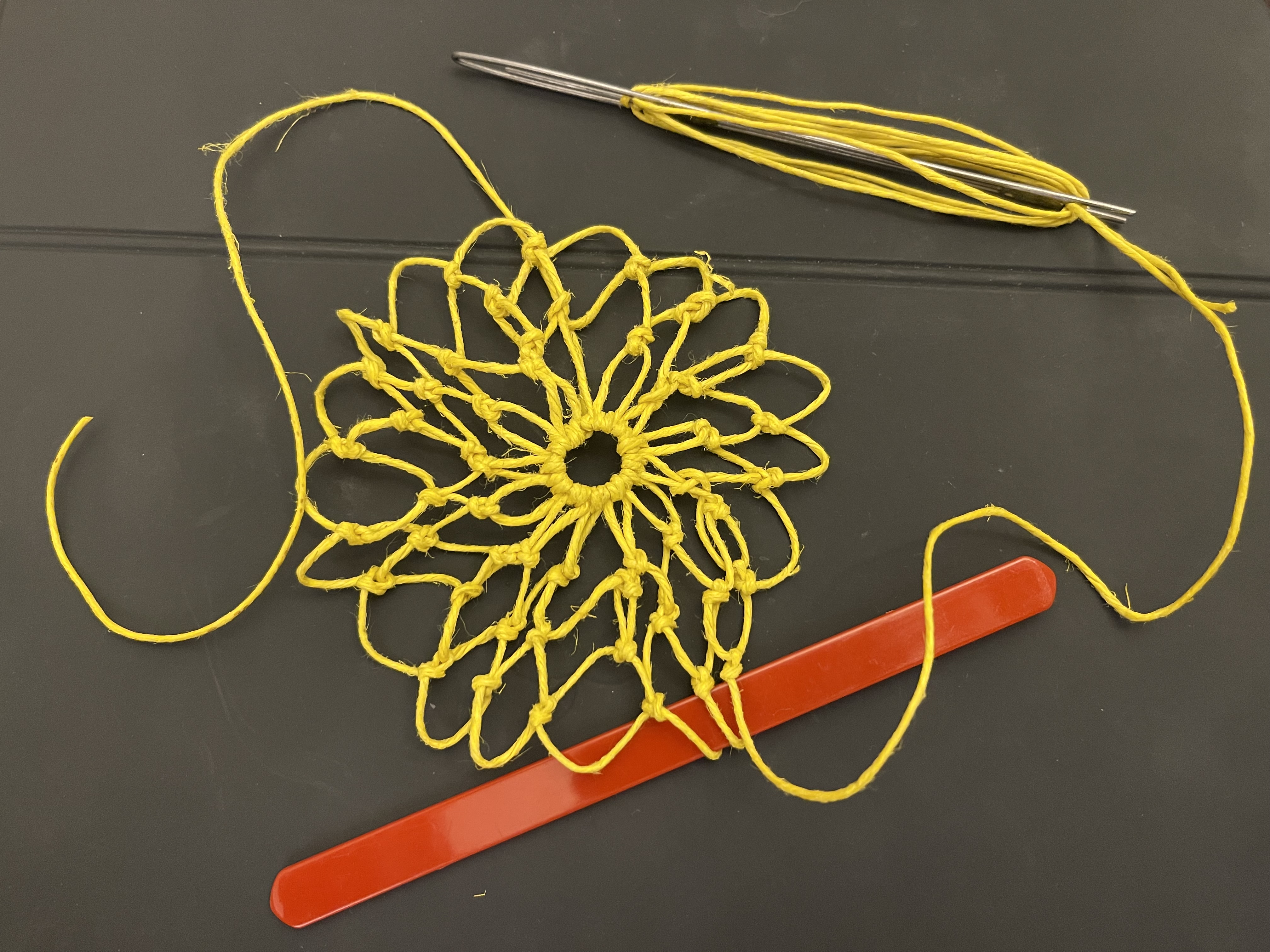
My sister wanted a water bottle holder to attach to her hammock chair. Netting to the rescue! I had a lucet cord in progress, from a ball of yellow hemp, courtesy of Ursula’s Alcove. I pulled thread from the inside of the ball to load my netting shuttle, then cut off the start of the lucet cord in progress to use as drawstring and handles. I knew the hemp would wash up to be softer and still sturdy, and she likes the color yellow. Win!
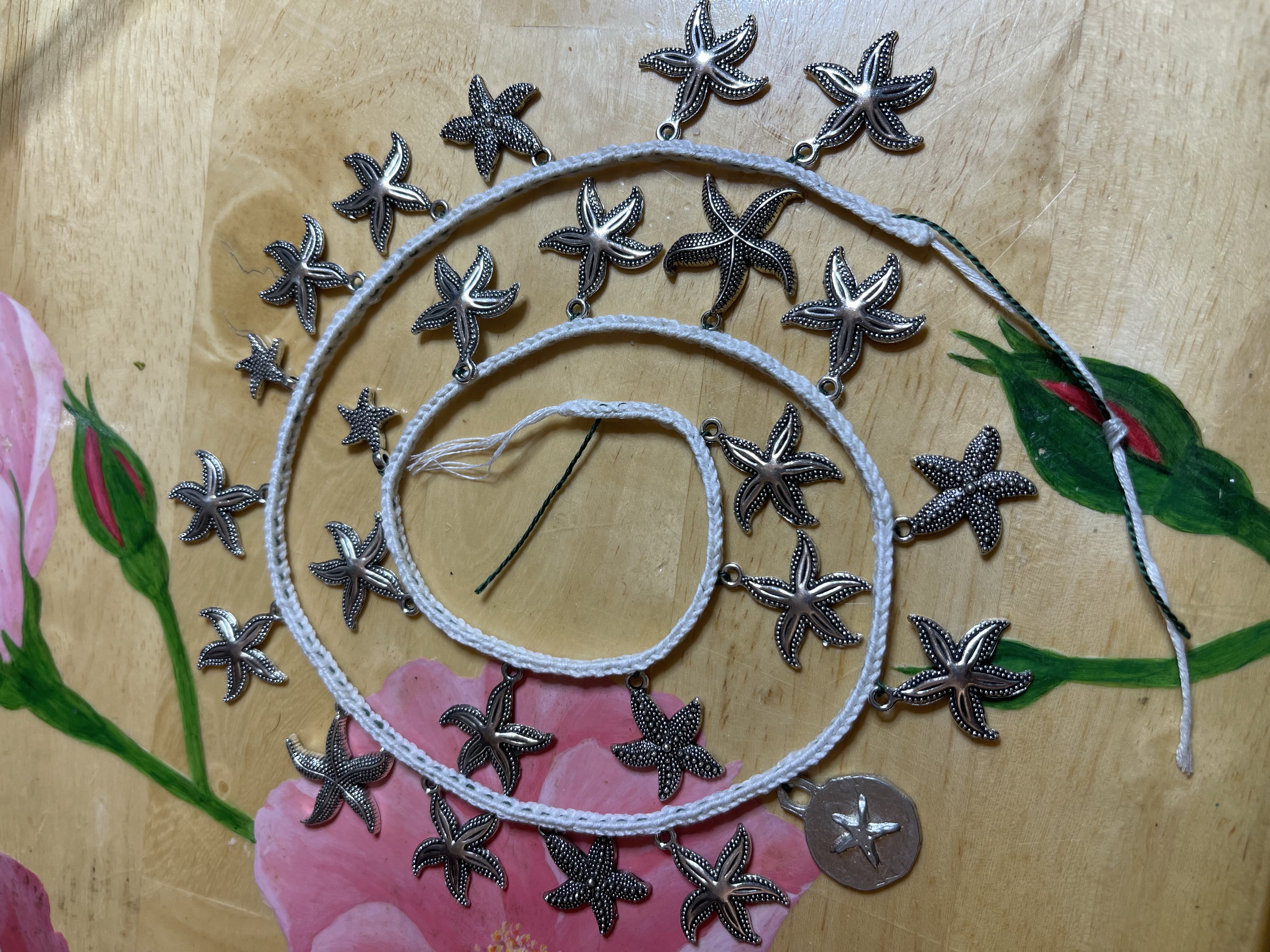
For local service to our SCA group, the Crown Province of Østgarðr, the viceregents hand out seastar charms. This past Sunday, our canton of Brokenbridge (Brooklyn, NY) had a class on ‘what to do with your seastar collection!?” I demonstrated how to attach charms to cords, 3 ways: using a secondary thread (lucet cord with a gimp), pre-threading onto the working thread (kumihimo), and incorporating them as you go (fingerloop braiding).
Here’s how the lucet cord turned out:
2 oz. of cherry wet spun 10/6 hemp yarn from Ursula’s Alcove, approx. 113 yards, turns into 37.5′ of square lucet cord, pre-washing.